

Research > National Projects > Research mission on technological and craftsmanship development in the Levant from the Paleolithic to the Post-classical period
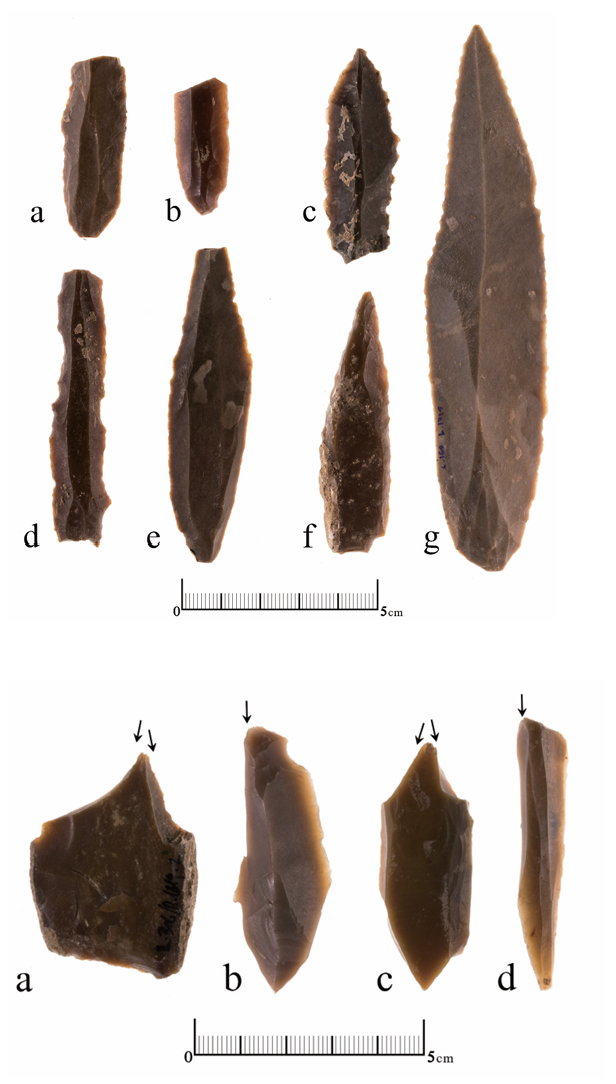
Principal Investigator: Cristina Lemorini
External links:
https://www.ltfapa.it/late-lower-paleolithic-in-israel/
https://www.ltfapa.it/science-and-technologies-for-sustainable-diagnostics-of-cultural-heritage/
The project was conceived and developed with the aim of studying the cognitive characteristics and the strategies of territorial adaptation and resource exploitation adopted by hominins who lived in the Levant during the late Lower Paleolithic, between 500,000 and 200,000 years ago. This is achieved through the analysis of the technological evolution of their lithic tools. The Research Mission has focused on the earliest evidence of technological development in these ancient human groups, which allowed the production of increasingly sophisticated and efficient stone tools, thus contributing to a more effective exploitation of natural resources by pre-Sapiens hunter-gatherers.
From the second half of 2021, this core research focus has been complemented by a second line of investigation that broadens the chronological scope of the project. This second research component aims to explore technological developments among prehistoric communities during the initial stages of the transition of Homo sapiens from hunter-gatherers to farmers and herders— a transformation that began in the Levant around 12,000 years ago among communities characterized by the use of lithic but not ceramic industries, known as the Pre-Pottery Neolithic (PPN, 8800–6500 BC). The Levant, acting as a bridge between the African, Asian, and European continents, is therefore a crucial geographic area for studying both the dispersal and evolution of the genus Homo and the processes of technological transformation and innovation in Homo sapiens.
Moreover, this role of geographic and cultural connection between the three continents continued throughout the Classical and Post-Classical periods, developing into complex cultural, religious, and economic interactions. For this reason, since 2023 the Research Mission has expanded its chronological horizon to include the study of material culture from Protohistoric, Classical, and Post-Classical archaeological contexts, through the application of innovative investigative methods.
Collaborators:
Alessandro Ciccola (RTD-A, Department of Environmental Biology); Eugenio Nobile (PhD Candidate in Archaeology at Tel Aviv University); Giulia Previti (RTD-A, Department of Ancient Sciences); Flavia Marinelli (Research Collaborator); Stella Nunziante Cesaro (SMATCH)
- Bibliography
- Vlad Litov, Flavia Marinelli, Cristina Lemorini, Ran Barkai, Continuity and innovation in the Late Acheulian: Technological and functional analysis of scrapers from Jaljulia, Southern Levant (500–300 ka), Journal of Human Evolution, 10.1016/j.jhevol.2025.103716, 205, (103716), (2025).
- Marinelli, F., Nunziante-Cesaro, S., Barkai, R. and Lemorini, C. (2025), Lower Palaeolithic small flake prehension: Use-wear and residue analyses reveal hominin grasping potential at late Acheulean sites in Israel and Italy. J. Quaternary Sci, 40: 332-354. https://doi.org/10.1002/jqs.3683
- Cyrielle Mathias, Cristina Lemorini, Flavia Marinelli, Sol Sánchez-Dehesa Galán, Maayan Shemer, Ran Barkai,Bulb retouchers half a million years ago: New evidence from late Acheulean Jaljulia, Israel,Journal of Archaeological Science: Reports,
Volume 47. doi.org/10.1016/j.jasrep.2022.103821.
- Lemorini C, Cristiani E, Cesaro S, Venditti F, Zupancich A, Gopher A (2020) The use of ash at Late Lower Paleolithic Qesem Cave, Israel—An integrated study of use-wear and residue analysis. PLoS ONE 15(9): e0237502. doi.org/ 10.1371/journal.pone.0237502
Further details about this research:
- Research type: Progetto nazionale
- Research topic: Lithic industry; Lithic and ceramic technology
- Fundings: MAECI Project, Archaeological Missions and Heritage