

Research > Sapienza Research Projects > Observation and Interpretation of Micro-Residues on Archeological Artefacts: Exploring the Applicability of Confocal Laser Induced Fluorescence (CLIF) Technique
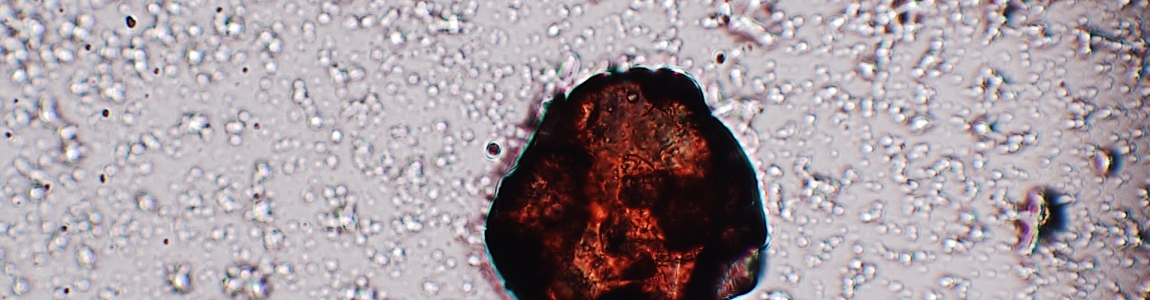
Principal Investigator: Cristina Lemorini
External links:
https://research.uniroma1.it/observation-and-interpretation-micro-residues-archeological-artefacts-exploring-applicability
The analysis of micro-residues is a fundamental method for detecting, documenting, and interpreting the function of artifacts recovered from archaeological sites. During their use, objects made from any type of raw material trap, in their active areas (for example, the edge of a knife), particles of the organic and inorganic elements that make up the worked materials. These particles, although degraded, can persist on the artifacts and, if properly sampled and analyzed, provide valuable information about the use-history of ancient tools and their role in past societies.
Currently, micro-residue analysis is based on protocols that integrate different techniques, combining the morphological detection of micro-residues on archaeological surfaces through microscopy with the application of non-invasive chemical methods. Although these protocols make it possible to obtain meaningful data regarding the use of ancient artifacts, they do not allow a high level of detail to be achieved due to the inherent limitations of these techniques, which often provide only partial compositional identification.
To overcome these limitations, the next necessary step in analytical protocols involves the application of invasive and destructive techniques, such as gas chromatography coupled with mass spectrometry (GC–MS).
This project aims to explore the applicability of Confocal Laser-Induced Fluorescence (CLIF) using new equipment available in the laboratory directed by the project’s Principal Investigator (PI). Although very promising—thanks to its potential to detect organic and inorganic substances in a non-invasive and non-destructive manner—the CLIF technique has never before been applied to micro-residue analysis.
The proposal is conceived as a pilot project focused on the CLIF-based characterization of substances that are consistently present in a given material (for example, palmitic acid or α-linolenic acid for identifying lipids), to be used as markers for detecting micro-residues on ancient surfaces and tools.
Collaborators:
Laura Ciapponi (Associate Professor, Department of Biology and Biotechnology “Charles Darwin”); Giovanna Serino (Biology and Biotechnology “Charles Darwin”); Marina Gallinaro (Associate Professor, Department of Ancient Sciences); Sergio Taranto (Research Fellow)
- Bibliography
Taranto, Sergio; Barcons, Adrià Breu; Portillo, Marta; Le Miere, Marie; Gomèz, Anna Bach; Molist, Miquel; Lemorini, Cristina, Unveiling the culinary tradition of ‘focaccia’ in Late Neolithic Mesopotamia by way of the integration of use-wear, phytolith & organic-residue analyses, In: SCIENTIFIC REPORTS. - ISSN 2045-2322. - 14:1(2024). [10.1038/s41598-024-78019-9]
Further details about this research:
- Research type: Progetto di ricerca medio
- Research topic: residui, fluorescenza, archeologia
- Fundings: Sapienza Medium Project