

Research > National Projects > PRIN Projects > URCHIN - Unravelling Changes in Island Connectivity through Integrated Studies: the Long-Term Perspective from Malta and the Tas-Silġ Sanctuary
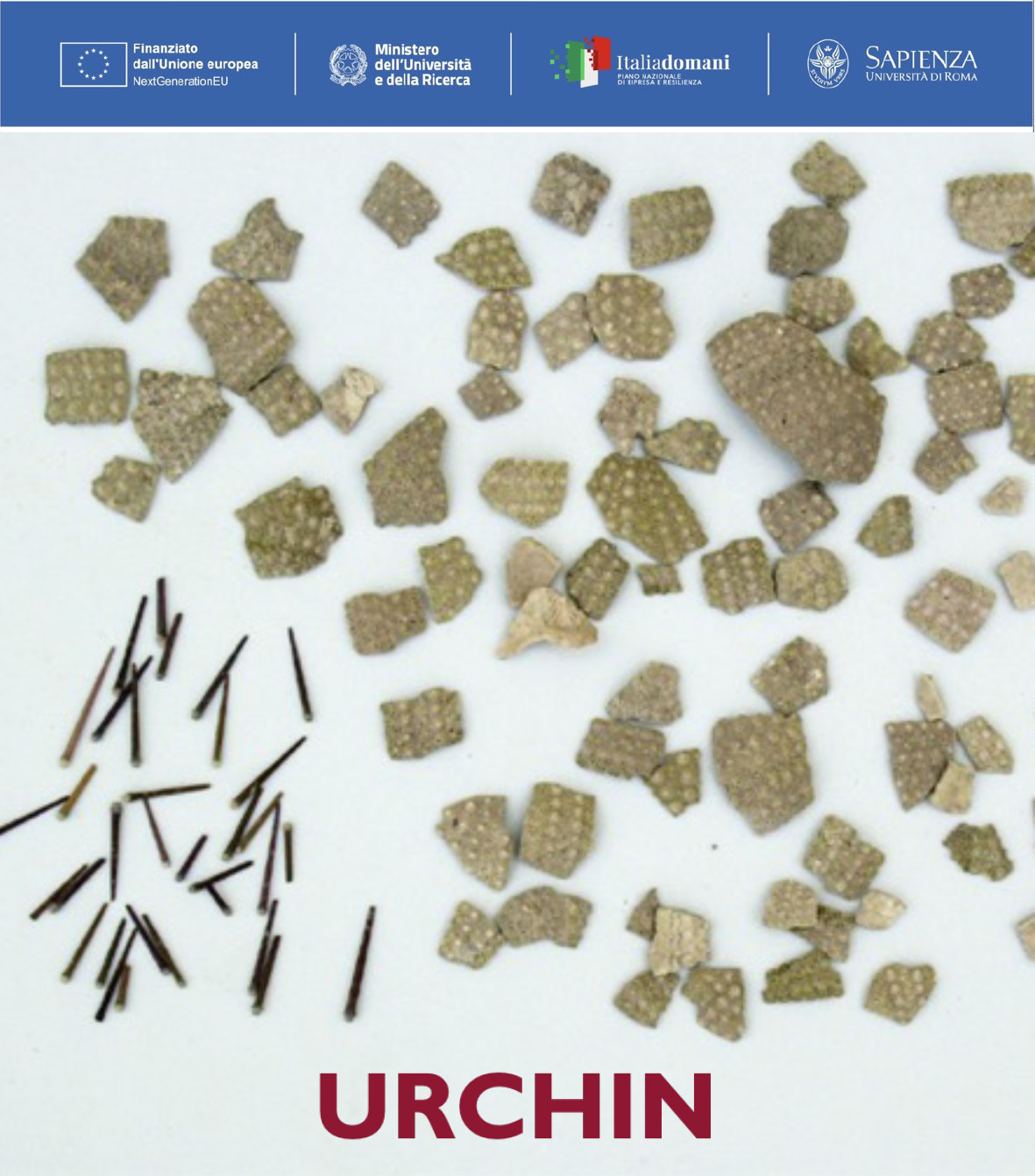
Principal Investigator: Giulia Recchia
The main goal of the URCHIN - Unravelling Changes in Island Connectivity through Integrated Studies: the Long-Term Perspective from Malta and the Tas-Silġ Sanctuary project is to explore the theme of connectivity in the central Mediterranean by adopting a multidisciplinary approach and a deep historical perspective.
In this respect, insular contexts have high potential for the analysis and understanding of both cultural interaction mechanisms, related transformations and permanence of cultural identity, as they are circumscribed space yet integrated and actively participating in the connective framework.
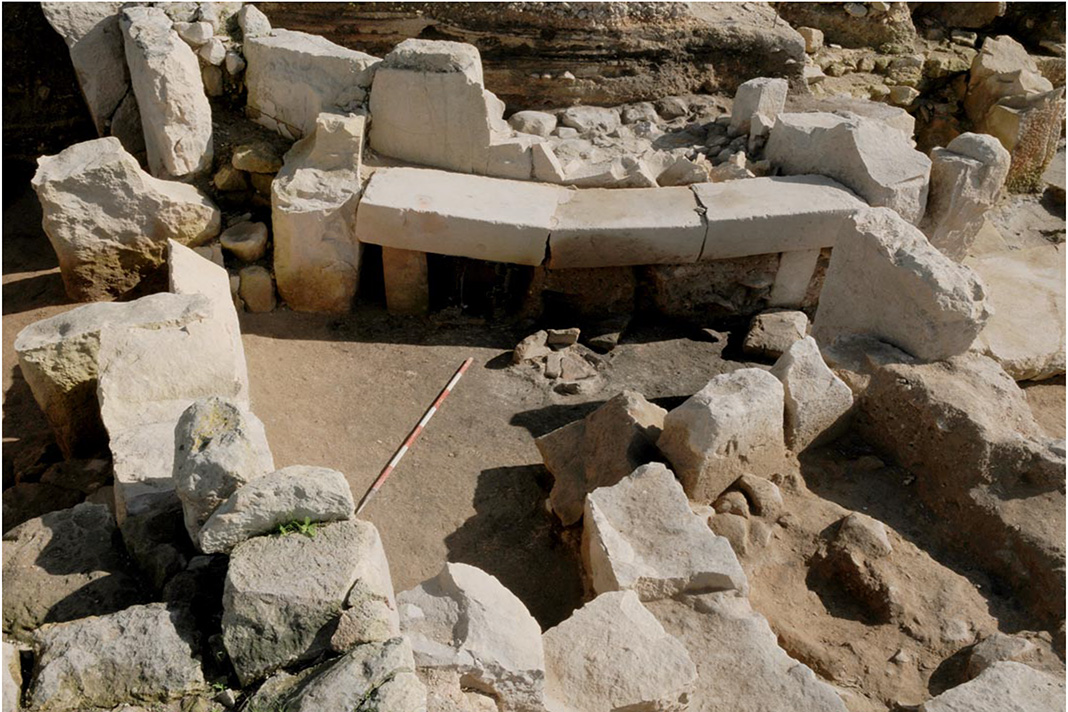
The research project is focused on the archaeological data coming from the Tas-Silġ site in Malta. Due to its extraordinarily long occupation (Late Neolithic to the Byzantine period - early 3rd mill. BC - 8th c. AD) and the symbolic-ritual function the site maintained during its long life this site represents a key case-study, it provides the unique opportunity to evaluate changes and continuity of ritual practices against the framework of interactions, acculturations, and colonisation. Data acquired by the work of the Italian Archaeological Mission in Malta at Tas-Silġ, of which all the RUs are members, provides a solid base for developing targeted analyses.
General trajectories of the Maltese archipelago connectivity from the Neolithic to the Roman period have been outlined by several works, chiefly based on the elements commonly considered for retracing interactions and processes of mobility (influx of exotic raw materials and goods, technological advancements, stylistic changes in material culture, architectural patterns, transformations in rituals and cult). Yet, diverse aspects are still debated, and various points remains to be clarified. The aim of the URCHIN is to advance the knowledge by adopting an integrated multidisciplinary approach, combining available data and the results of new targeted studies.
The role of live animals and their derived products in exchanges remains still little explored. One of the main points of the URCHIN project is to fully exploit the potential of animals as proxies for mobility, interactions and trade, by means of zooarchaeological and biomolecular analyses, these latter having been only scarcely applied to animal remains from Maltese contexts.
Malta represents a key case study, as animal species were imported in time for abroad. The main domestic species (caprines, pigs, cattle) had been introduced in the archipelago in the phase of Neolithization; afterwards new species were brought there, such as the wild cat, the domestic fowl, the dove and turtle dove and the wild rabbit. With the complete analysis of the multiperiod faunal assemblages from Tas-Silġ the project aims at providing a clear picture of these dynamics, mainly related to external connections and cultural patterns in the exploitation of animals.
In addition to the imports of exotic species in the archipelago, change and continuity in the role of commonly used animals for both sustenance and cultic offerings is considered, as well as continuity and/or changing in animal feeding practices and the composition of flocks. For these aspects biomolecular analyses provide now significant insights.
Cultic practices and their transformations, also related to external influences, are studied on their spatial dimension through architectonic studies and functional and geostatistical analyses.
Issues related to the imports of distinct pottery classes and/or local imitations of external models particularly in the historic periods is explored by adopting archaeological and archaeometric analyses. These are also applied to the study of persistence and transformations in traditional aspects of pottery making (such as potter recipes, patterns of firing, exploited sources of clay etc.). To complete the picture Organic residues analyses on pottery is conducted for the investigation of transformed dimension(s) of ritual practices, which materialized in changed patterns of ritual banqueting.
The team is composed by three Research Units: Sapienza University of Rome (PI Giulia Recchia), Cattolica University of Milan (co-PI Francesca Bonzano), University of Salento (co-PI Grazia Semeraro).
The Research Unit of Sapienza University of Rome is responsible in particular for the investigation and analysis of the prehistoric phases of the sanctuary, for the zooarchaeological analyses (in collaboration with Claudia Minniti – Deparment of Antiquities, Sapienza), and for the processing and interpretation of the biomolecular data (in collaboration with Mary Anne Tafuri –Department of Environmental Biology, Sapienza).
Collaborators:
Martina di Matteo (Assegnista), Younes Naime (Assegnista)
- Bibliography
Recchia G., Cazzella A. 2025, Figurines anthropomorphes féminines préhistoriques de L’archipes maltais, in Femina Celesta. Symboles du féminin sacrée, Catalogue de l’exposition 2024-2025, Musée de l’Alta Rocca, Livia, pp. 42-49.
Bonzano F., Recchia G., Semeraro G. cds, “Encased like a gem”. The architecture of the sanctuary of Tas-Silġ in Malta through centuries, between tradition and reception, in R. Ferritto, L. Fuduli (eds.), Mediterranean architecture: cross-cultural influences in public and private forms in Antiquity, Bloomsbury Publishing.
Further details about this research:
- Research type: Progetto di ricerca PRIN
- Research topic: Archeologia
- Fundings: PRIN 2022
| Image gallery | ||
|---|---|---|
 | ||