

Research > Sapienza Research Projects > Castro: The Rediscovery of an Inland Settlement within the Vulci Hinterland
Principal Investigator: Alessandro Conti
The project was initiated through a cooperation agreement signed in 2021 between the Department of Classics of Sapienza University and the Soprintendenza Archeologia, Belle Arti e Paesaggio per la Provincia di Viterbo e l’Etruria meridionale. The agreement provides for the documentation and study of the grave goods and groups of stray finds from the necropoleis of the Etruscan center of Castro, now in the Civic Museum “Pietro e Turiddo Lotti” in Ischia di Castro (Viterbo). The ultimate aim of the agreement is a scholarly reassessment of these funerary complexes, with a view to their publication and their enhancement within the Museum, also in anticipation of its future reinstallation.
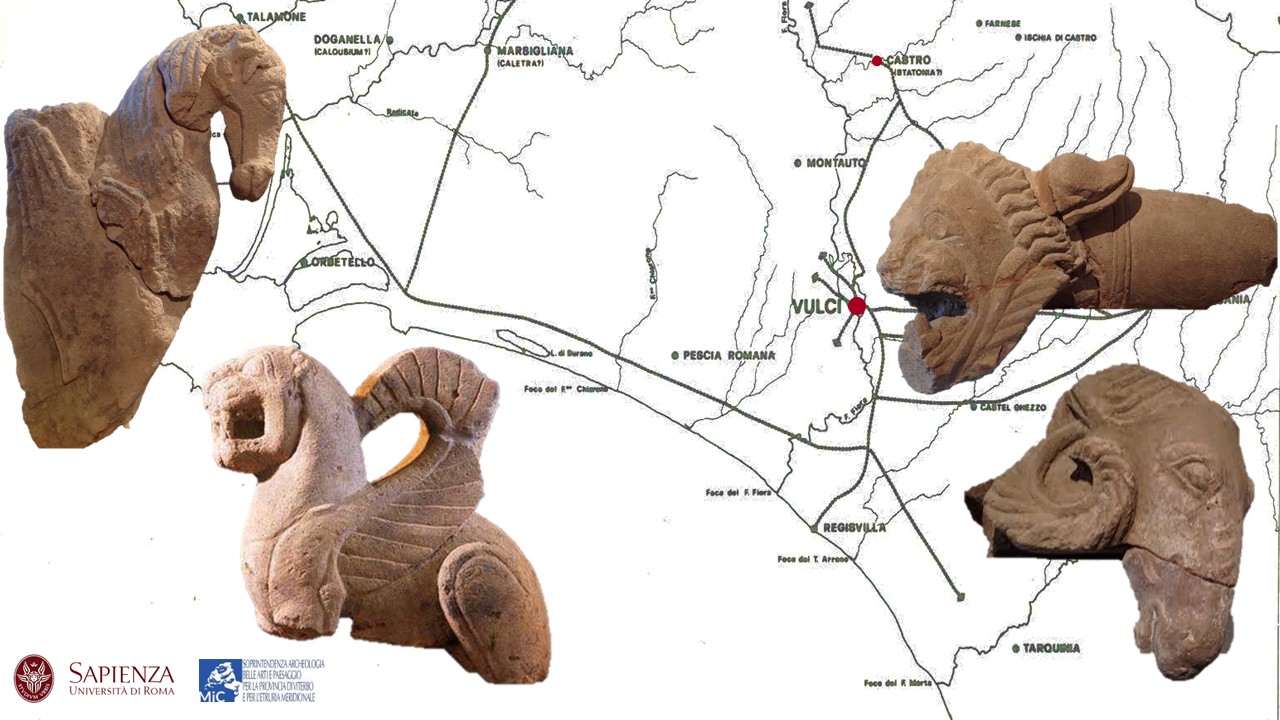
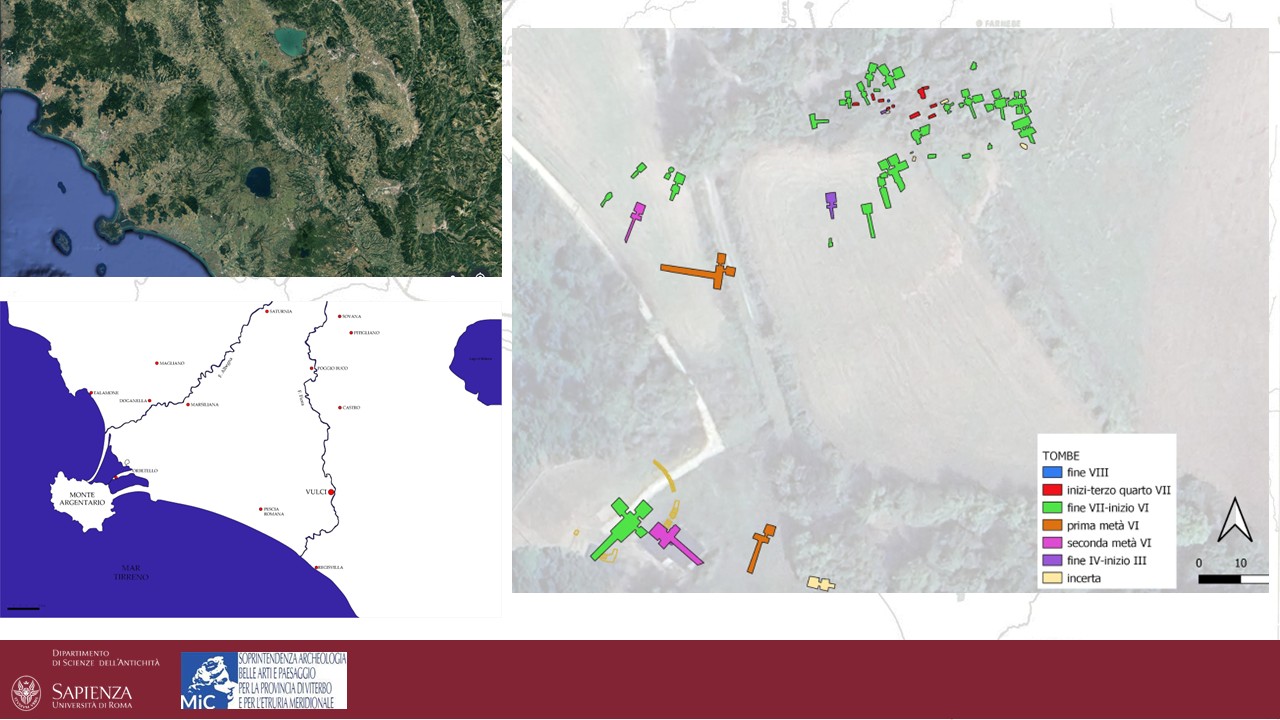
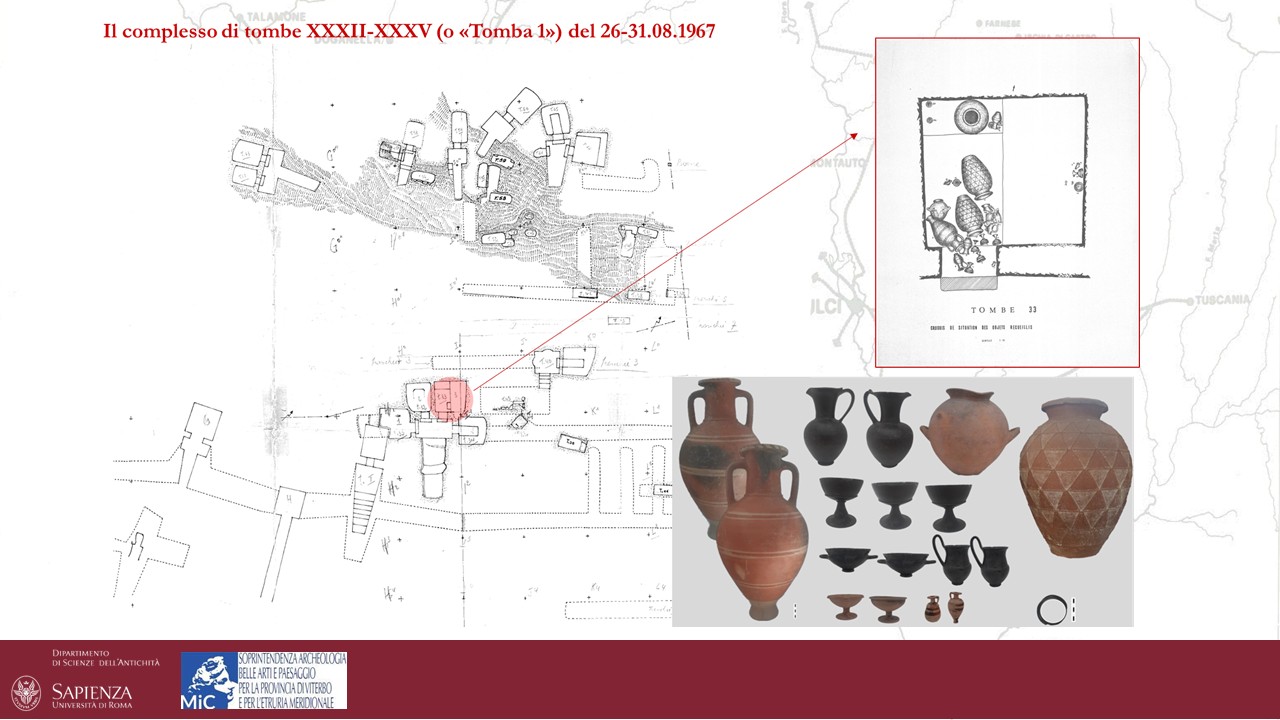
A significant development in archaeological research within the Castro area, as well as greater attention to the site on the part of both the heritage authorities and the Italian academic community, took place particularly in the 1960s. This was due to the systematic investigations carried out in the eastern necropolis of the ancient settlement by the *Centre Belge de Recherches Étrusques et Italiques*, operating under concession and in collaboration with the then Soprintendenza alle Antichità dell’Etruria meridionale. These investigations led to the discovery of funerary complexes—often intact—of extraordinary historical and documentary value, which revealed not only the wealth and vitality of the ancient settlement, but also its role as a satellite center of the major metropolis of Vulci. This role must be understood within the wider dynamics of territorial control exerted by Vulci between the 7th and 6th centuries BC along strategic routes connecting it to other urban centers such as Chiusi and Orvieto. Despite the exceptional results of that undertaking—suffice it to recall the so-called “Tomba della Biga” or the “Tomba dei Bronzi”—no systematic publication of the discoveries was ever produced. The Belgian scholars published only brief preliminary reports, moreover lacking adequate documentation.
Between the 1980s and the early 2000s, the Soprintendenza attempted a first comprehensive reassessment of the evidence resulting from the Belgian excavations, which in the meantime had been placed on permanent loan to the Civic Museum of Ischia di Castro, or, as in the case of the “Tomba della Biga,” assigned to the National Etruscan Museum of Viterbo. However, these efforts did not yield satisfactory results due to the absence, in Italian archives, of the original excavation documentation—with the exception of the field journals compiled by the local assistants of the Soprintendenza.
This situation was noted also in the first scholarly catalogue of the Museum of Ischia di Castro, edited by Regione Lazio in 2011, which for the first time presented the publication of 13 of the 67 tomb groups excavated by the Belgian mission.
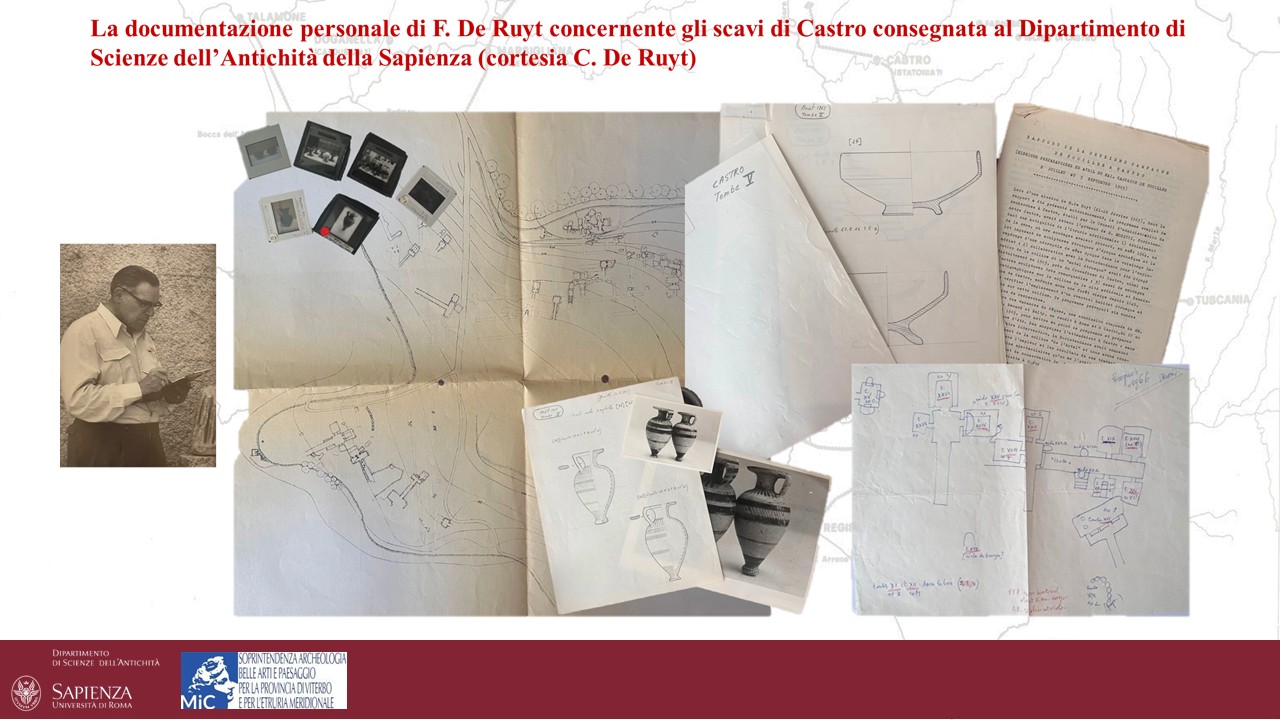
In March 2023, thanks to a complex and prolonged research effort, it was possible to trace in Belgium a substantial documentary heritage, consisting of maps, plans, drawings, slides, photographs, and excavation reports, now deposited in the archive of the Chair of Etruscology at Sapienza University. This very significant “recovery” has made it possible:
- to launch a new phase of studies on the Castro site on a solid foundation, through the re-contextualization of numerous grave goods which, once reassigned to their respective funerary complexes, will regain their status as historical documents of extraordinary importance and can finally be the subject of a scientific publication, almost sixty years after the conclusion of the excavations;
- to implement a project for the valorization of excavation documentation and archaeological materials. The process of re-contextualization will provide the opportunity to create new visitor pathways and new possibilities for both physical and virtual exhibitions (through the creation of a digital archive accessible remotely), not only within the Civic Museum of Ischia di Castro, but also in other exhibition venues.
Collaborators:
Elisa Abbondanzieri Chiara Bartolucci Claudia Carlucci Biancalisa Corradini Stefano Gensini Chiara Martina Papa
- Bibliography
A. Conti, B. Corradini, Castro, un centro dell’entroterra vulcente. 50 anni dopo, in Vulci e il suo territorio. 50 anni dopo, Atti del XXX Convegno di Studi Etruschi e Italici (Montalto di Castro, 2025), cds.
A. Conti, Tra Vulci e Castro. Un gruppo di anfore etrusco-corinzie e un “nuovo” ceramografo vulcente, in prep.
Further details about this research:
- Research type: Progetto di ricerca piccolo
- Research topic: Etruscology
- Fundings: Sapienza University of Rome
| Image gallery | ||
|---|---|---|
 |  |  |