

Ricerca > Progetti internazionali > Collection of Ancient Vergilian Exegesis: A Thousand Years of Scholarship on the Aeneid
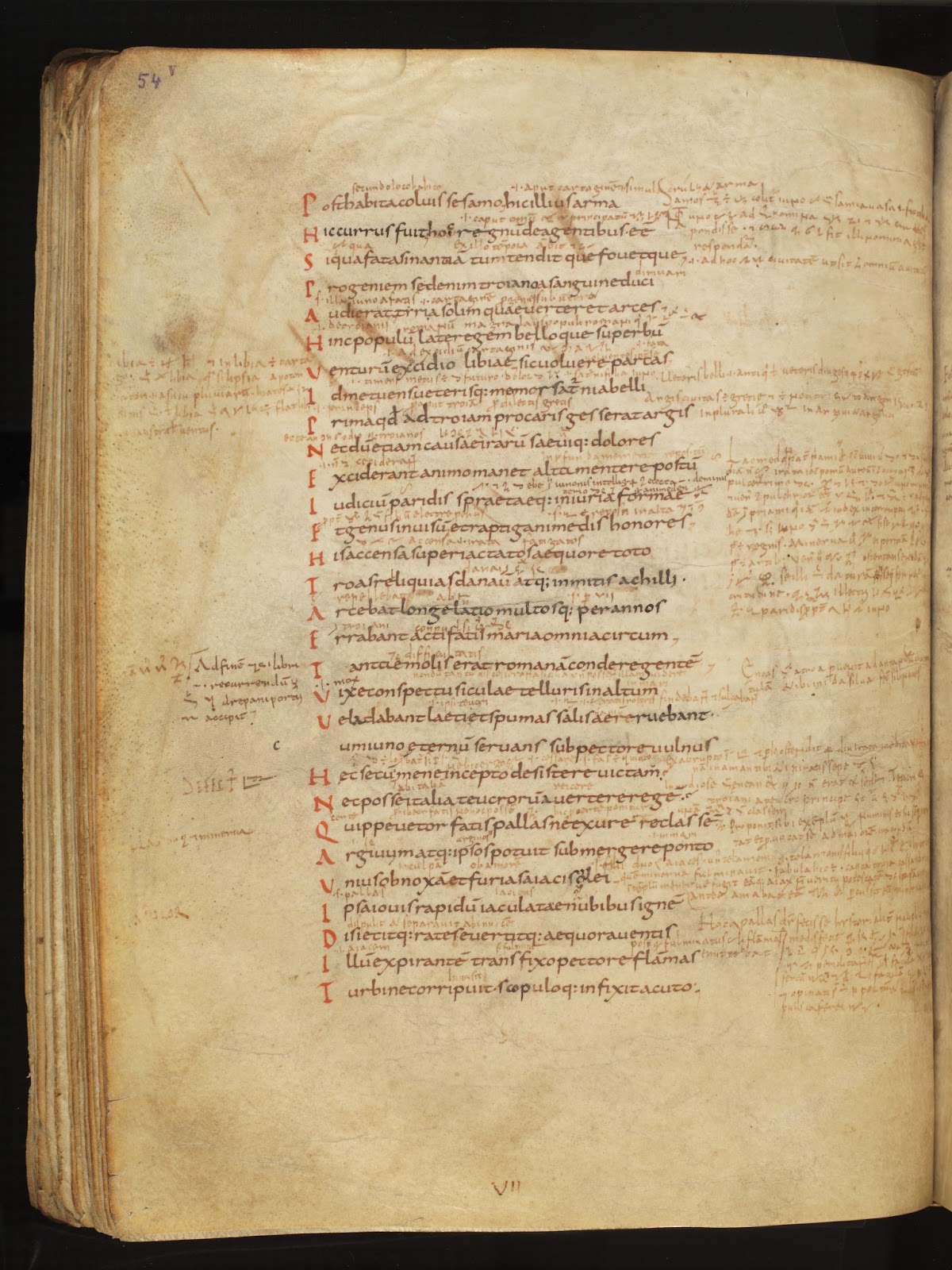
Responsabile della ricerca: Elena Spangenberg Yanes
Link esterni:
https://cordis.europa.eu/project/id/101229169
The Aeneid, Vergil’s masterpiece, published in 17 BC, two years after the death of the author, is universally recognised as the most important Roman epic poem. Since the very beginning of its circulation, in the 1st c. AD, it has drawn the attention of philologists and has been included in the school teaching of Latin grammar and rhetoric; in the following centuries an increasing number of commentaries on the Aeneid has been produced, engaging generations of scholars up to modern times. Therefore Vergil’s poem has not only played a key role in the history of poetry in Western literature and, more generally, in the reception of classical civilisation, but also in the history of the linguistic, rhetorical, and literary education in Europe as well as in the development of scribal practices and philological methodologies across Antiquity and Middle Ages.
From the first 1000 years of such exegetical effort, two complete commentaries, countless glosses, Greek translations, and grammar books have survived: their tradition, that counts approximately 160 witnesses and also includes papyri and late antique parchments, is closely intertwined. The rich variety of the an-cient and early medieval scholarship on the Aeneid can now be systematically investigated and illustrated thanks to digital humanities. Focussing on the first millennium of the transmission of the poem, CAVE aims to collect and critically edit the ancient and medieval exegetical works on the Aeneid, and to recon-struct, in a broader perspective, the places, moments, cultural environments, teaching practices in which Vergil’s masterpiece was studied. CAVE addresses these challenges with a multidisciplinary approach, gathering experts in textual criticism, palaeography, digital humanities, history of scholarship, linguistics, multispectral imaging. The research team will build an open source digital infrastructure, that will make available all the exegetical materials along with the catalogue of their manuscripts.
Collaboratori:
Senior staff: Prof.ssa Michela Rosellini (Scienze dell’Antichità); Dott.ssa Anna Gioffreda (SARAS)
- Bibliografia
Agosti & Bianconi 2019: G. Agosti – D. Bianconi (a c. di), Pratiche didattiche tra centro e periferia nel Mediterraneo tardoantico, Spoleto 2019.
Barwick 1911: K. Barwick, Zu Serviusfrage, «Philologus» 70, 1911, 106-45.
Baschera 2000: C. Baschera, Ipotesi d’una relazione tra il Servio Danielino e gli scolii veronesi a Virgilio. Un testimone oculare narra la scoperta del palinsesto di Gaio presso la Biblioteca Capitolare di Verona, Verona 2000.
Bellandi & Ferri 2008: F. Bellandi – R. Ferri (ed. by), Aspetti della scuola nel mondo romano. Atti del Convengo, Pisa, 5-6 dicembre 2006, Amsterdam 2008.
Boot & Steinová 2023: P. Boot – E. Steinová, Editing Glosses as Networks. Exploring the Explorative Edition, pre-print 2023, <https://osf.io/preprints/osf/7auxz>.
Boschetti 2007: F. Boschetti, Methods to Extend Greek and Latin Corpora with Variants and Conjectures: Mapping Critical Apparatuses onto Reference Text, in Proceedings of the Corpus Linguistics Conference (CL 2007), Bir-mingham 2007 <http://ucrel.lancs.ac.uk/publications/CL2007/paper/150_Paper.pdf>.
Brusuelas 2019: J. H. Brusuelas, The Authority of Being Useful: Servius on and off the Page, in S. Boodts – P. De Leemans – S. Schorn (ed. by), Sicut dicit: Editing Ancient and Medieval Commentaries on Authoritative Texts, Turnhout 2019, 301-30.
Cayless 2018: H. A. Cayless, Critical Editions and the Data Model as Interface, in R. Bleier et al. (ed. by), Digital Scholarly Editions as Interfaces, Norderstedt 2018, 249-63.
Chahoud et al. 2019: A. Chahoud – M. Rosellini – E. Spangenberg Yanes (a c. di), Latin Grammarians Forum 2018-2019, «Rationes Rerum» 14, 2019.
Chegai et al. 2019: A. Chegai – M. Rosellini – E. Spangenberg Yanes (ed. by), Textual Philology Facing ‘Liquid Modernity’: Identifying Objects, Evaluating Methods, Exploiting Media, «Storie e linguaggi» 5/1, 2019.
Chiesa 2010: P. Chiesa, Sul controllo filologico delle edizioni critiche digitali, «Filologia mediolatina» 17, 2010, 325-46.
Cinato et al. 2023: F. Cinato – A. Lahaussois – J. B. Whitman (eds.), Glossing Practice: Comparative Perspectives, Lanham (MD) 2023.
Consalvi 2023: A. Consalvi, Soluzioni per il markup dell’apparato critico: il caso della Latin Grammarians Collection, «Lexis» 41/2, 2023, 453-76.
Damon 2016: C. Damon, Beyond Variants: Some Digital Desiderata for the Critical Apparatus of Ancient Greek and Latin Texts, in M. J. Driscoll – E. Pierazzo (ed. by), Digital Scholarly Editing. Theories and Practices, Cambridge 2016, 201-18.
Danovi 2023a: V. R. Danovi, Was the Commentary on Vergil by Aelius Donatus Extant in the Ninth Century? A Reappraisal, «Philologus» 167, 2023, 156-72.
Danovi 2023b: V. R. Danovi, Il rapporto stemmatico tra i testimoni continuativi di Tiberio Claudio Donato e il “Virgilio di Tours”, «RhM» 166, 2023, 318-20.
Delvigo 1987: M. L. Delvigo, Testo virgiliano e tradizione indiretta. Le varianti probiane, Pisa 1987.
Delvigo 2017: M. L. Delvigo, Classici latini dopo Augusto: le prime fasi della storia del testo di Virgilio, «Vichiana» 54/2, 2017, 57-66.
De Paolis forthc.: P. De Paolis, Il Virgilio veronese e la scuola, in M. Bassetti (a c. di), Città, cattedrali e biblioteche al passaggio tra tardoantico e alto medioevo: a partire dal caso di Verona, Spoleto forthc.
Eder et al. 2016: M. Eder – J. Rybicki – M. Kestemont, Stylometry with R: A Package for Computational Text Anal-ysis, «The R Journal» 8/1, 2016, 107-21.
Ferri & Zago 2016: R. Ferri – A. Zago (ed. by), The Latin of the Grammarians. Reflections about Language in the Roman World, Turnhout 2016.
Fischer 2019: F. Fischer, Digital Classical Philology and the Critical Apparatus, in M. Berti (ed. by), Digital Classical Philology, Ancient Greek and Latin in the Digital Revolution, Berlin-Boston 2019, 203-19.
Foster 2017: F. Foster, Teaching Language through Virgil in Late Antiquity, «CQ» 67/1, 2017, 270-83.
Fraenkel 1948: E. Fraenkel, Review of Rand et al. 1946, «JRS» 38, 1948, 131-43.
Fraenkel 1949: E. Fraenkel, Review of Rand et al. 1946, «JRS» 39, 1949, 145-54.
Fressura 2017: M. Fressura, Vergilius Latinograecus. Corpus dei manoscritti bilingui dell’Eneide. Parte prima (1-8), Pisa-Roma 2017.
Funaioli 1930: G. Funaioli, Esegesi Virgiliana antica: prolegomeni alla edizione del commento di Giunio Filargirio e di Tito Gallo, Milano 1930.
Garcea et al. 2016: A. Garcea – M.-K. Lhommé – D. Vallat (éd. par), Fragments d’érudition: Servius et le savoir an-tique, Hildesheim 2016.
Garcea & Vallat 2022: A. Garcea – D. Vallat (éd. par), Ars et commentarius: la grammaire dans le commentaire de Servius à Virgile, Turnhout 2022.
Georgii 1905-06: H. Georgii (ed.), Tiberi Claudi Donati Ad Tiberium Claudium Maximum Donatianum filium suum interpretationes Vergilianae, I-II, Lipsiae 1905-06.
Gerlach 2008: J. Gerlach, Gnomica Democritea. Studien zur gnomologischen Überlieferung der Ethik Demokrits und zum Corpus Parisinum, Wiesbaden 2008.
Geymonat 1995: M. Geymonat, The Transmission of Virgil’s Works in Antiquity and the Middle Ages, in N. Hors-fall (ed. by), A Companion to the Study of Virgil, Leiden 1995, 293-312.
Giammona et al. 2023: C. Giammona – M. Rosellini – E. Spangenberg Yanes (a c. di), Latin Grammarians Fo-rum 2021. Atti del convegno, Roma 21-23 settembre 2021, Hildesheim 2023.
Guillaumin 2019: J.-Y. Guillaumin (éd. par), Servius. Commentaire sur l’Énéide de Virgile. Livre IV, Paris 2019.
Jeunet-Mancy 2012: E. Jeunet-Mancy (éd. par), Servius. Commentaire sur l’Énéide de Virgile. Livre VI, Paris 2012.
Karsdorp et al. 2021: F. Karsdorp – M. Kestemont – A. Riddell, Humanities Data Analysis: Cases Studies with Python, Princeton 2021.
Keil 1860: H. Keil (rec.), Prisciani grammatici Caesariensis De figuris numerorum, De metris Terentii, De praeexercitamen-tis rhetoricis libri. Institutio de nomine et pronomine et verbo. Partitiones duodecim versuum Aeneidos principalium. Accedit Prisciani qui dicitur liber De accentibus, Lipsiae 1860.
Kiessling et al. 2019: B. Kiessling – R. Tissot – P. A. Stokes – D. Stökl Ben Ezra, eScriptorium: An Open Source Platform for Historical Document Analysis, in Proceedings of the International Conference on Document Analysis and Recognition Workshops, Sydney 2019, 19-24.
Kiss 2019: D. Kiss, Classics into Code: Latin Texts in the Digital Space, in Chegai et al. 2019, 222-37.
Landis 2010: S. A. Landis, The Transmission of the Interpretationes Vergilianae, «Aevum» 84/2, 2010, 519-28.
Longobardi et al. 2014: C. Longobardi – C. Nicolas – M. Squillante (éd. par), Scholae discimus: pratiques scolaires dans l’antiquité tardive et le haut Moyen Âge, Paris 2014.
Malaspina 2019: E. Malaspina, Il futuro dell’edizione critica (cioè lachmanniana), più o meno digitale. Riflessioni (in)attuali, in Chegai et al. 2019, 35-60.
Mariotti 1966: S. Mariotti, Review of Stocker & Travis 1965, «RFIC» 94, 1966, 127.
Marshall 1993: P. K. Marshall, Tiberius Claudius Donatus on Virgil Aen. 6.1-157, «Manuscripta» 37, 1993, 3-20.
McGann 2013: J. McGann, Coda. Why Digital Textual Scholarship Matters; or, Philology in a New Key, in N. Fraistat – J. Flanders (ed. by), The Cambridge Companion to Textual Scholarship, Cambridge 2013, 274-88.
Monella 2018: P. Monella, Why are there no comprehensively digital scholarly editions of classical texts?, in A. Cipolla (ed. by), Digital Philology: New Thoughts on Old Questions, Padova 2018, 141-59.
Monella 2020: P. Monella, A Digital Critical Edition Model for Priscian: Glosses, Graeca, Quotations, «ARID» 44, 2020, 135-49.
Munk Olsen 1985: B. Munk Olsen, L’étude des auteurs classiques latins aux XIe et XIIe siècles, II: Catalogue des manu-scrits classiques latins copiés du IXe au XIIe siècles. Livius – Vitruvius. Florilèges – Essais de plume, Paris 1985.
Murgia 1975: C. E. Murgia, Prolegomena to Servius 5. The Manuscripts, Berkeley-Los Angeles-London 1975.
Murgia & Kaster 2018: C. Murgia – R. A. Kaster (ed. by), Serviani in Vergili Aeneidos libro IX-XII commentarii, New York 2018.
Passalacqua 1978: M. Passalacqua, I codici di Prisciano, Roma 1978.
Passalacqua 1999: M. Passalacqua (a c. di), Prisciani Caesariensis Opuscula, II, Roma 1999.
Pierazzo 2017: E. Pierazzo, Teoria del testo, teoria dell’edizione e tecnologia, «Ecdotica» 14, 2017, 135-48.
Pirovano 2010: L. Pirovano, Glosse di Tiberio Claudio Donato nel Virgilio di Tours: problemi e prospettive. 1, «Voces» 21, 2010, 163-208.
Pirovano 2011: L. Pirovano, Un ‘nuovo’ foglio manoscritto delle Interpretationes Vergilianae di Tiberio Claudio Donato (Beinecke Library MS 1020), «ZPE» 178, 2011, 85-6.
Pirovano 2014: L. Pirovano, Glosse di Tiberio Claudio Donato nel Virgilio di Tours: problemi e prospettive. 2, in Lon-gobardi et al. 2014, 115-29.
Ramires 1996b: G. Ramires (a c. di), Servio. Commento al libro IX dell’Eneide di Virgilio, con le aggiunte del cosiddetto Servio Danielino, Bologna 1996.
Ramires 2003: G. Ramires (a c. di), Servio. Commento al libro VII dell’Eneide di Virgilio, con le aggiunte del cosiddetto Servio Danielino, Bologna 2003.
Ramires 2022: G. Ramires (éd. par), Servius. Commentaire sur l’Énéide de Virgile. Livre VIII, Paris 2022.
Rand 1916: E. K. Rand, Is Donatus’ Commentary on Virgil Lost?, «CQ» 10, 1916, 158-64.
Rand et al. 1946: E. K. Rand – J. J. Savage – H. T. Smith – G. B. Waldrop – J. P. Elder – B. M. Peebles – A. F. Stocker (edd.), Servianorum in Vergili carmina commentariorum editionis Harvardianae volumen II, quod in Aeneidos libros I et II explanationes continet, Lancaster 1946.
Robinson 2007: P. Robinson, Electronic Editions Which We Have Made and Which We Want to Make, in A. Ciula – F. Stella (ed. by), Digital Philology and Medieval Texts, Pisa 2007, 1-12.
Robinson 2016: P. Robinson, The Digital Revolution in Scholarly Editing, in B. Crostini – G. Iversen – B. M. Jensen (ed. by), Ars Edendi Lecture Series IV, Stockholm 2016, 181-207.
Rosellini 2017: M. Rosellini, Paucorum in usum? Travagli di un editore critico nell’epoca della post-verità, «MD» 79, 2017, 101-18.
Rosellini 2019: M. Rosellini, Aggiornamento metodologico e riflessioni critiche sui procedimenti ecdotici, in Chegai et al. 2019, 1-6.
Savage 1932: J. J. H. Savage, The Manuscripts of the Commentary of Servius Danielis on Virgil, «HSPh» 43, 1932, 77-121.
Savage 1934: J. J. H. Savage, The Manuscripts of Servius Commentary on Virgil, «HSPh» 45, 1934, 157-204.
Scappaticcio 2012: M. C. Scappaticcio, Papyri Vergilianae. L’apporto della papirologia alla storia della tradizione vergi-liana (I-VI d. C.), Liège 2012.
Spangenberg Yanes 2022: E. Spangenberg Yanes, A New Database of the Latin Grammarians. Linguistic and Phil-ological Critieria of the Linguistic Markup, «Storie e linguaggi» 8/2, 2022, 1-34.
Stein 2023: E. Stein, Parallel Glosses, Shared Glosses, and Gloss Clustering. Can Network-Based Approach Help Us to Understand Organic Corpora of Glosses?, «Journal of Historical Network Research» 9, 2023, 36-100.
Stocker & Travis 1965: A. F. Stocker – A. H. Travis (edd.), Servianorum in Vergili carmina commentariorum editionis Harvardianae, quod in Aeneidos libros III-V explanationes continet, Oxford 1965.
Stok 2013: F. Stok (a c. di), Totius scientiae plenus: percorsi dell’esegesi virgiliana antica, Pisa 2013.
Stok & Ramires 2022: F. Stok – G. Ramires, Sul rapporto fra DS e la tradizione manoscritta serviana (con note sul commento a Georg. 1.1-278), «ExClass» 26, 2022, 85-108.
Stokes et al. 2021: P. A. Stokes – B. Kiessling – D. Stökl Ben Ezra – R. Tissot-H. Gargem, The eScriptorium VRE for Manuscript Cultures, in C. Clivaz – G. V. Allen (ed. by), Ancient Manuscripts and Virtual Research Environments, «Classics@» 18, 2021.
Tanselle 2007: G. T. Tanselle, Electronic Textual Editing: Foreword, <http://www.tei-c.org/About/Archive_new/ETE/ Preview/tanselle.xml> [last update on 31 October 2007].
Tarrant 2016: R. J. Tarrant, Texts, Editors, and Readers, Cambridge 2016.
Tarrant 2019: R. Tarrant, Aspects of Virgil’s Reception in Antiquity, in F. Mac Góráin – C. Martindale (ed. by), The Cambridge Companion to Virgil. Second Edition, Cambridge 2019, 43-62.
Teeuwen & O’Sullivan 2012: M. Teeuwen – S. O’Sullivan (ed. by), Carolingian Scholarship and Martianus Capella, Turnhout 2012.
Teeuwen & van Renswoude 2017: M. Teeuwen – I. van Renswoude (ed. by), The Annotated Book in the Early Middle Ages: Practices of Reading and Writing, Turnhout 2017.
Thilo 1881-87: G. Thilo (rec.), Servii grammatici qui feruntur in Vergilii carmina commentarii, I-III.1, Lipsiae 1881-87.
Thilo & Hagen 1902: G. Thilo – H. Hagen (recc.), Servii grammatici qui feruntur in Vergilii carmina commentarii, III.2: Appendix Serviana, Lipsiae 1902.
Timpanaro 1978: S. Timpanaro, Contributi di filologia e storia della lingua latina, Roma 1978.
Timpanaro 1986: S. Timpanaro, Per la storia della filologia virgiliana antica, Roma 1986.
Timpanaro 1994: S. Timpanaro, Nuovi contributi di filologia e storia della lingua latina, Bologna 1994.
Timpanaro 2001: S. Timpanaro, Virgilianisti antichi e tradizione indiretta, Firenze 2001.
Tosi 2013: R. Tosi, Osservazioni sulla letteratura ‘strumentale’ (alla luce degli Gnomica Democritea di Gerlach), «Ei-kasmos» 24, 2013, 307-18.
Trovato 2014: P. Trovato, Everything You Always Wanted to Know About Lachmann’s Method. A Non-Standard Handbook of Genealogical Textual Criticism in the Age of Post-Structuralism, Cladistics, and Copy-Text, Padova 2014.
Vallat 2022: D. Vallat (éd. par), Vergilius orator: lire et commenter les discours de l’Énéide dans l’Antiquité tardive, Turn-hout 2022.
Vallat & Vallat 2023: D. Vallat – M. Béjuis-Vallat (éd. par), Servius. Commentaire sur l’Énéide de Virgile. Livre I. Donat. Vie de Virgile – Introduction aux Bucoliques, Paris 2023.
Zetzel 1981: J. E. G. Zetzel, Latin Textual Criticism in Antiquity, New York 1981.
Zetzel 2004: J. E. G. Zetzel, In Rand’s Margins: From Fraenkel’s Review to a Post-Modern Servius, paper delivered at the APA panel on Servius, December 2004, <https://www.academia.edu/35776337/In_Rands_Margins_From_Fraenkels_Review_to_a_Post_modern_Servius>.
Zetzel 2018: J. E. G. Zetzel, Critics, Compilers, and Commentators, Oxford 2018.
Altri dettagli sul progetto:
- Tipologia: Progetto di ricerca ERC
- Ambito della ricerca: SH5: Latin Philology, Latin Palaeography, Digital Humanities
- Finanziamenti: ERC CoG nr. 101229169